
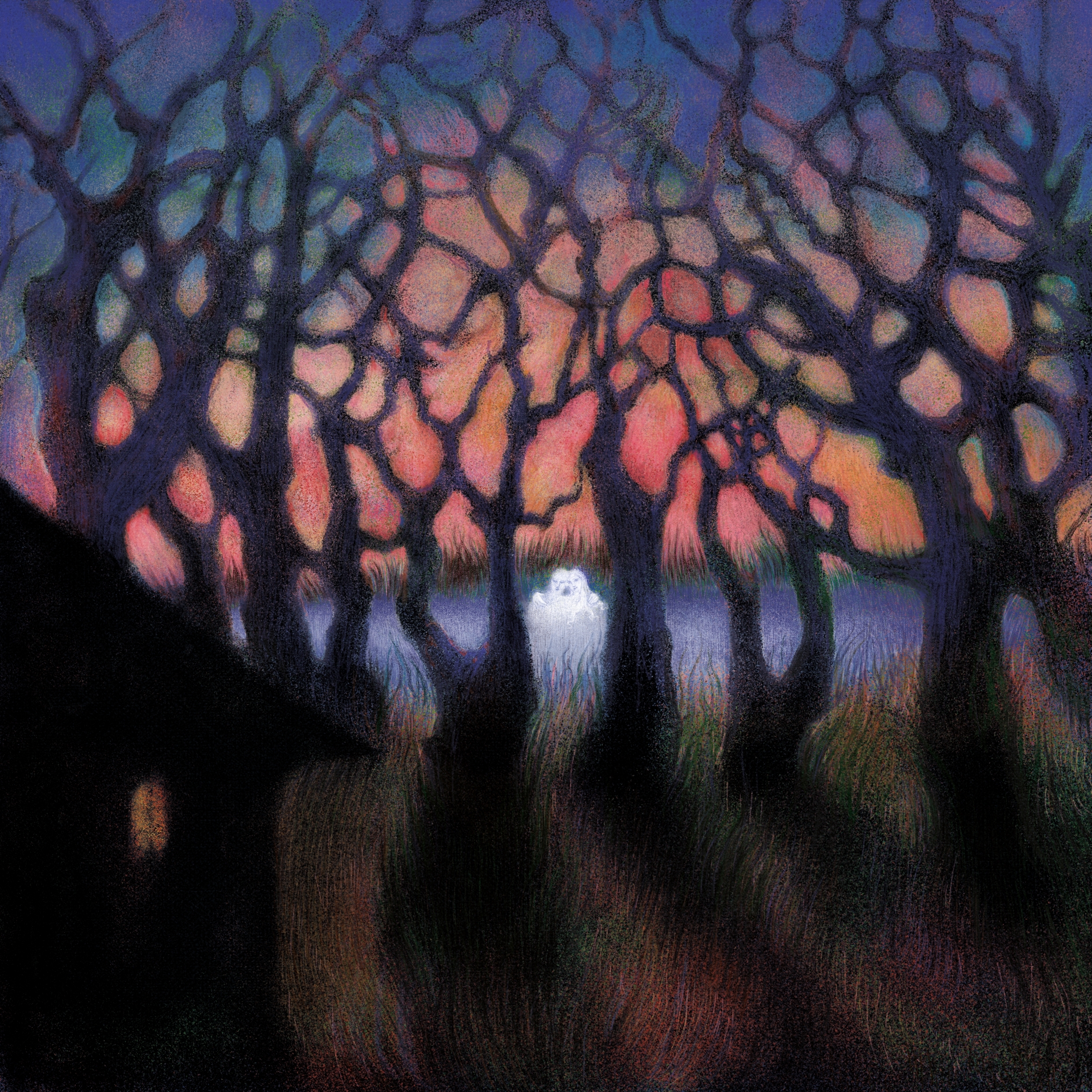
The Thread
—
Release on 31 July 2026
—
Bella Union
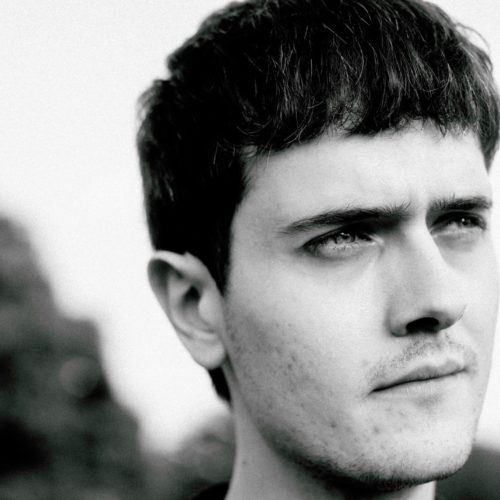
A clear sense of confidence in restraint radiates out of the debut album from Blake Watt, the London-based singer/songwriter who records as Family Stereo. The pleasure lies in the delicacy of measure on The Thread, an album of folk-tinged and brush-stroked reflections on distance and connection that majors in an evocative kind of narrative economy, suggesting rather than telling its stories. Inviting, dynamic and subtly cinematic, its artfully crafted precision feels like the work of a fast-maturing talent.
The record arrives in the aftermath of a string of prodigious EPs from the 25-year-old Blake, son of Everything but the Girl’s Tracey Thorn and Ben Watt. The development from those early works is clear, but it’s the kind of evolution that prefers to refine rather than embellish. As Blake says, “I think my writing has been getting more pared-back as I’ve progressed. I find more and more that simple is better. I love telling a story in the simplest way or conveying a feeling in the simplest way, with not too many frills.”
That intuitive clarity is evident on the album opener, ‘Remedy’, where Blake suggests a history at a stroke with the opening line (“After all you said and all I did…”). The haunting arrangement is minimalist yet richly expressive, Blake’s spare piano and producer Sam Hodder-Williams’s synth shimmers maintaining a mood of emotional suspension with a featherlight touch and an elegantly unhurried grasp of melody. Blake’s warmly tender vocal, too, gets the measure of the song in its controlled sense of pace and understatement.
Throughout the record, details accrue in finely judged increments. The plangent soft rock of ‘Waiting on Nina’ navigates themes of personal discovery over Dov Sikowitz’s luminous lapsteel. ‘Sea Change’ touches on how relationships move in time over mellifluous synths, used to evoke a mood rather than stress a melody. ‘Fault Lines’ navigates the mysteries in the spaces between people with a falling shiver of ethereal synths, a pulsing rhythm and a lean lyricism; etching out the bare bones of a story, Blake tells the listener all they need to fill in the blanks. Touches of mandolin, banjo and mellotron help flesh out the songs’ ambient surroundings elsewhere.
A former drama student, he understands the value of implication over explication, referencing New York’s Wooster Group as an influence. “They would present these disparate images on stage, like a tent with a light emanating from within and an old gramophone playing old music. And they’ll have someone reading out a transcript of a telephone call from their mother or something, and it conjures up different feelings. They will have an overarching story but it’s more impressionist. I like that brush-strokes approach.”
The title track bears out the point, acting as a kind of album centrepiece in the way it conveys the record’s core story through themes and motifs – “images of space, distance, wide open country, badlands, tunnels”, says Blake. While the influence is a long-distance relationship, literalism is deftly avoided. “I like asking questions more than answering them in lyrics,” says Blake. “A lot of the lyric writers I like do that. They will tell a story through snapshots rather than, you know, this happened and then that happened. I don’t like lyrics that are too literal because it doesn’t let the mind explore what they could be inferring. I’m trying to capture a feeling, or a sense of not understanding a feeling and trying to get to grips with that feeling.”
The rapturous dream-state reverie of ‘Removed’ illustrates the power of understated images, its red moons and figures in white conjuring ghostly tableaux; Blake credits the influence of The Wicker Man for the song’s enveloping mood. The mantric ‘Collapsing’ is similarly haunted, while ‘DLR’ shows a discreet dynamism and a canny grasp of contrast, its upbeat folk-rock melody framing a contemplation on growing up with youthful spritz. The dramatic crescendo of ‘Silhouette on the Hill’ – another striking image – is all the more powerful for the restraint shown elsewhere on the record, lending a tale of “connections missed” an understated yet tangible force. And in the record’s climax, ‘Three Moon Trail’ contemplates a gentle arrival before ‘Tunnels’ closes the record on a question mark, sending you tunnelling back to the album’s opening to trace rhyming motifs and images across its emotional route map.
Formerly a drummer, Blake began making his way toward these songs of travel and distance when he took up the guitar at 15. From influences including Elliott Smith, John Martyn, Bob Dylan, Neil Young and Adrianne Lenker, he made formative forays into folk-pop with songs such as ‘Robot Boy’ and ‘My Favourite Band’; whimsical gems with a distinct sense of levity and unforced melody. He honed his voice live, across slots at festivals including Kendal Calling, headline shows from London’s Windmill to the Lexington, and gigs supporting the likes of Lichen Slow and Midlake. Eagle-eyed audiences might have spotted him at London’s Moth Club in 2025 performing with a reconvened Everything but the Girl, where a cover of ‘Removed’ held firm amid a carefully curated setlist. With support from John Kennedy on Radio X, standout EP tracks like ‘Matter’ and ‘I Knew I Loved You Then!’ plotted a sure, steady growth, while the gorgeously autumnal ‘Early Promise’ has notched up an impressive 215,000-ish Spotify streams.
Building on – and, to some extent, dismantling – those foundations, The Thread was recorded over nine months in the north London studio of album producer and close collaborator Sam Hodder-Williams, who also provided string arrangements and multitasked across acoustic/electric guitar, mandolin, synths and more. “Musically, I wanted to explore folk songwriting but with a kind of lush arrangement,” says Blake. “Sam is very good at realising a sound, and he can write string arrangements, and we wanted to throw everything in the pot but keep it kind of natural. I wanted to explore the pared-back thing but then his arrangements are quite lush, and I think they complement each other quite nicely.”
With collaborators including Pendo Masote on violin, Tom Allan on banjo, Ella Bleakley on backing vocals (‘Tunnels’) and George Vaux on bass helping add hints of colour, the result is an album of lush melodies and moods, a record that moves at its own pace, maps out a space of its own making and invites the listener in. “There’s so much good music coming out at the moment and it is quite an understated record,” says Blake, “but I hope that people give it some time. I’m just trying to explore the craft as much as I can and to get better all the time.” Follow The Thread, then: it will lead you somewhere special.