

HiGHWAY TO HEAVEN
—
Release on 27 March 2026
—
Groenland Records
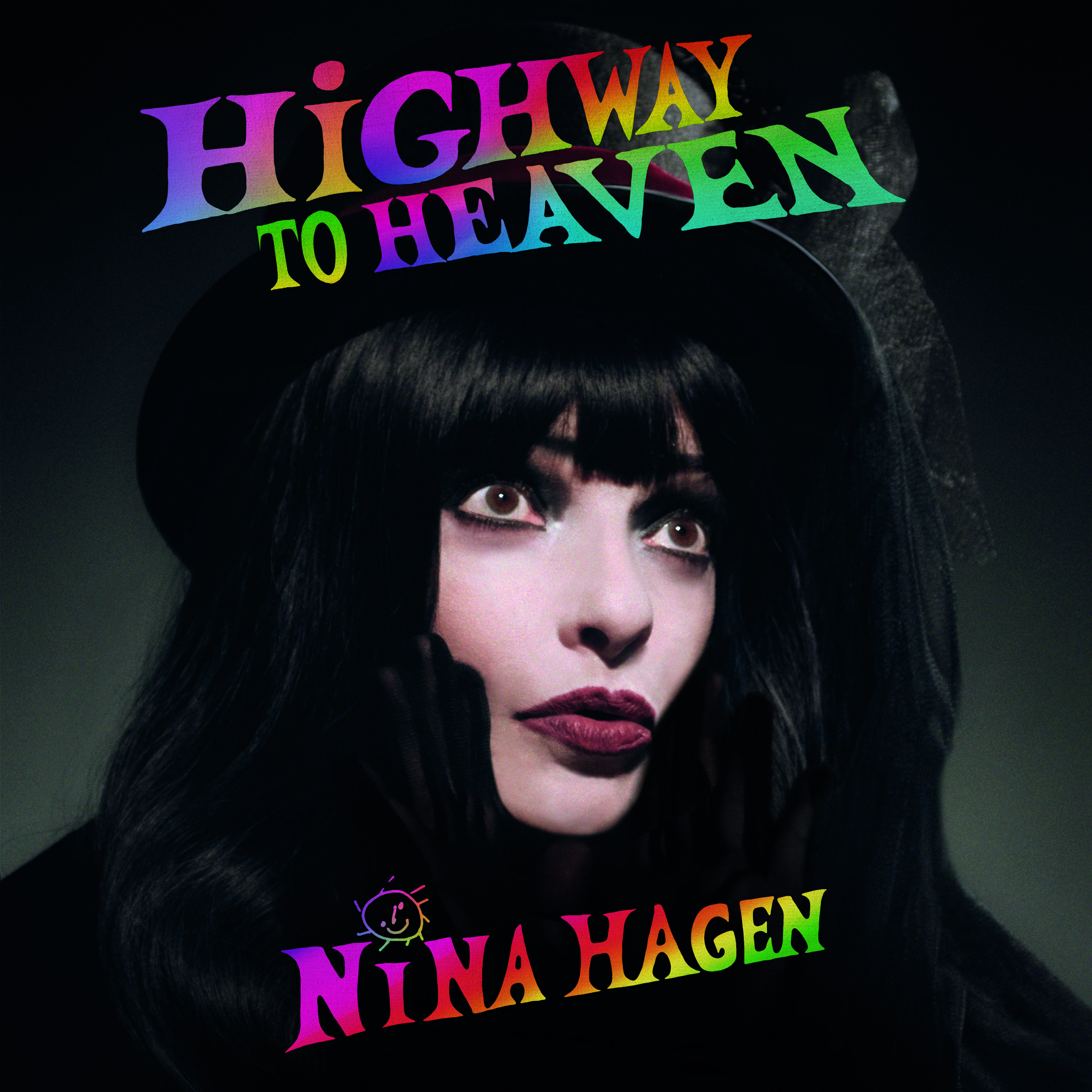
Born in East Berlin in 1955 as Catharina Hagen, Nina Hagen has for decades been one of the most influential and singular figures in German-speaking and international music and culture. Raised in an artistic household, she developed an extraordinary vocal and theatrical presence at an early age. She achieved her first professional successes in the former GDR, appearing in DEFA film productions and becoming one of the country’s most popular young voices with the hit song “Du hast den Farbfilm vergessen.”
As later revealed in her autobiographies Mein sinnliches und übersinnliches Leben (1988) and Bekenntnisse (2010), Hagen was exposed to serious dangers during her youth in the GDR. A decisive turning point came in 1972 following a near-death experience under LSD, which she herself described as a “baptism by fire in the Holy Spirit.” From that moment on, her faith in God and Jesus Christ became a defining force in her life—something she increasingly proclaimed in her concerts from the late 1970s onward. Her close ties to the GDR singer-songwriter and opposition scene, particularly to Wolf Biermann, led to her permission to leave the country in 1976—a political rupture that marked the beginning of her international career as a singer.
In the West, Hagen found an artistic home in the emerging punk and new wave movements, which provided fertile ground for her expressive power and experimental spirit. In 1977, at the height of the punk revolution and during her first stay in London, she played the female lead in The Go Blue Girl, an avant-garde short film by Juliana Grigorova, who later became her manager in the 1980s and produced numerous pop music videos and concert recordings with her.
Back in West Berlin, the legendary Nina Hagen Band was formed in 1977, featuring members of the old Lokomotive Kreuzberg and keyboardist Reinhold Heil. The band’s self-titled debut album, released in 1978, became a milestone in German pop history. In 1979, Nina Hagen parted ways with the band and embarked once again on an independent solo path.
She relocated her personal and professional base to New York and Los Angeles, where she engaged with the international avant-garde discourse and developed it into a highly distinctive artistic language. During this period, she became pregnant with her first child, Cosma, and simultaneously found fulfillment in the creation of her first English-language album, NunSexMonkRock (1982) – an uncompromising, expressive work that proved aesthetically groundbreaking for artistic freedom. Alongside her musical output, Hagen’s public persona evolved into that of one of the most striking voices and performers within the cultural and political discourse of the time. At the legendary Rock in Rio festival in 1985, as well as on tours throughout North and South America, Japan and Europe, she repeatedly captivated her devoted and enthusiastic audiences.
From early on, Nina Hagen took a clear and outspoken stance on issues such as peace and justice, anti-racism, environmental protection, animal rights, and human dignity – an engagement that remains inseparable from her identity to this day. The births of her two children, Cosma (1981) and Otis (1990), marked deeply personal milestones during a period of intense human and artistic development.
Her stylistic uniqueness and diversity continue consistently throughout a body of work that, from the late 1970s to the present, encompasses rock and pop albums, electronic productions, spiritual and religious music, gospel and Bertolt Brecht programs, as well as German- and English-language concept albums. Works such as Angstlos/Fearless (1983), In Ekstase/In Ecstasy (1985), Nina Hagen (1989), Street (1991), Revolution Ballroom (1993), BeeHappy & Freud Euch (1996), Return of the Mother (2000), Irgendwo auf der Welt (2006), the English-language gospel-rock album Personal Jesus (2010), Volksbeat (2011), and UNiTY (2022) exemplify the breadth of her repertoire.
Regardless of genre, her artistic credo remains constant: radical authenticity, social commitment, and a persistent refusal to be confined by aesthetic conventions. Beyond music, Nina Hagen continues to maintain a strong cultural presence. In 2009, at the age of 54, she was officially baptized. She produced her first self-financed gospel album, wrote and published her autobiography, and embarked on extensive gospel music tours and reading tours. She continues to work as a comedic actress and voice actor, has produced audiobooks, appeared as a television personality, and collaborated with artists from a wide range of genres – from punk legends to orchestral musicians, from pop formations to literature and performance projects. Her live performances, presented in countless line-ups and formats, retain cult status to this day.
Nina Hagen is an exceptional artistic phenomenon: a singer and performer with international reach, a politically alert voice, and a personality whose work – spanning five octaves and several decades – consistently navigates between critique, spirituality, entertainment, and artistic innovation. Her influence extends far beyond music, establishing her as one of the most distinctive women in contemporary German and international cultural history.