
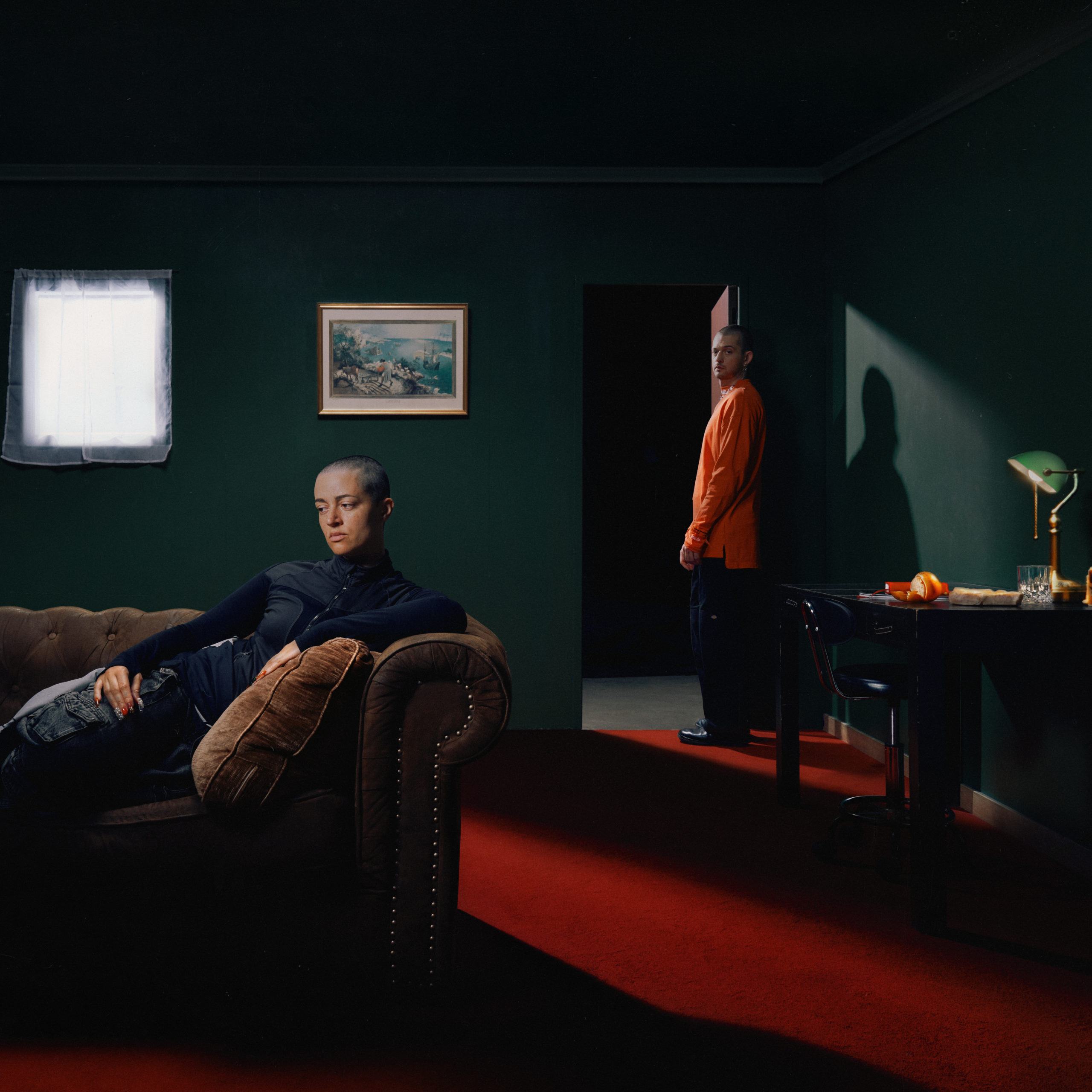
Story Takes Place On A Couch
—
Release on 12 February 2027
—
What if storms could sing?
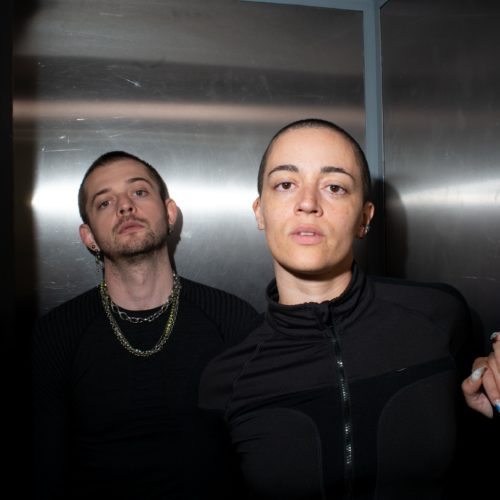
With an augmented piano-and-vocals sound, enhanced by machines and intoxicating guitars, KALUPTO invites us to live the present moment to the full. At the crossroads of indie-electronica and powerful vocals, the Parisian alternative duo composes a veritable ode to the storm, drawing its strength from a cathartic voice and unique electronic textures. From James Blake to Bon Iver’s 22 A Million era, via Laura Mvula and Alicia Keys on The Element of Freedom, KALUPTO transforms turmoil into an incantation, carried by powerful, soulful melodies. Like a meeting of two currents, a storm over the ocean, their music blends subtlety with intensity.
It all began around ten years ago, on a muted piano. Struck by melancholy, Calypso would hum little tunes, letting her emotions dictate the melodies. She recorded these bursts of improvisation, promising herself she would one day turn them into songs. A few years later, despite her doubts, her desire to bring this music to life remained undiminished. She then played Victor the first compositions she’d sketched out on piano and vocals.
They met at their jazz school. Though driven by the same musical sensibility, the two artists draw on different influences. Whilst Calypso envisions her compositions accompanied by an orchestra and is still hesitant to explore electronic music, Victor is more familiar with synthetic sounds. “It’ll come,” he assures her. In the meantime, they experiment with their instruments and their computer, seeking ways to amplify the power of these tracks without altering their essence: the simple piano notes, the original melodies and harmonies are gradually enriched by electric guitar and Victor’s voice.
The name KALUPTO emerged in 2018, following their first rehearsals, when Calypso was researching her own first name. She discovered a verb meaning ‘to hide’: a discovery that immediately struck a chord. The name captures the ambivalence that runs through her relationship with music, between the desire to share her songs on stage and the urge to take refuge in her cave. It also evokes the necessity of putting oneself out there as an artist, and the difficulty of coming to terms with one’s public image, particularly as a woman. With KALUPTO, Calypso finds a space that is both protective and exposed, where she can be fully herself and let all her vulnerability shine through in her singing, from ‘kalupto’ to ‘Now It’s Gone’, via ‘Head Down’ and ‘Child’.
On stage, the two musicians play with the audience’s expectations, mischievously subverting that moment when you think you’re about to see a star take to the stage, only to discover a technician who’s come to check a connection. Dressed in black, they take their places unassumingly, plug into their instruments and introduce themselves. Without pretence, KALUPTO celebrates the strength of being oneself, at the heart of a storm that rumbles, threatens or reassures. Their music then becomes a cry from the heart, an almost superhuman emotional release, with the aim of moving and, perhaps, healing.
The duo were notably shortlisted during the initial selection rounds for the ‘Inouïs du Printemps de Bourges 2026’ in Île-de-France. They also took to the stage at the Maison de la Radio on 25 January 2026, alongside Victor Solf, as part of the Hyper Week-End Festival, for a tribute to Frank Ocean and a reinterpretation of his album Blond(e).
KALUPTO asserts a unique musical identity, where the intimacy of piano and vocals meets the power of electronic instruments and guitars. It is music steeped in contrasts, capable of turning fragility into strength and a storm into a space of liberation.
KALUPTO is a cry from the heart, a superhuman force, created to heal.