
Eldorado
—
Release on 25 September 2026
—
Capitane Records
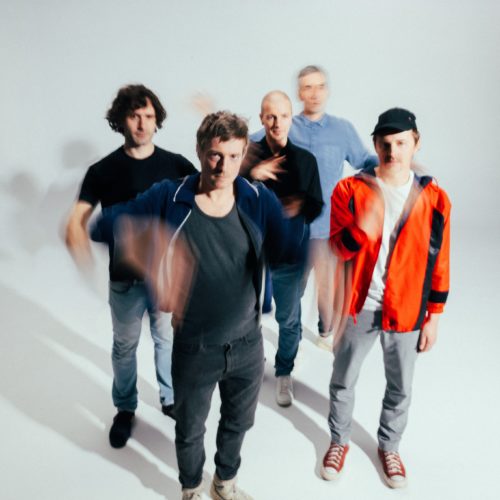
Nearly ten years after Nocturne, Girls in Hawaii return with Eldorado, their fifth album. A comeback record in the deepest sense of the word: a return to the band, a return to instinctive songwriting, a return to the simple pleasure of playing together, but also a return to a story that began in the early 2000s and has since been shaped by joy, loss, doubt, and transformation.
The title Eldorado comes from the album’s second single. It evokes the pursuit of an ideal that one chases without ever being certain of reaching it: a form of truth, a great song, a place where fears can finally rest. For Girls in Hawaii, this Eldorado is far from a comforting mirage. It is a tension, a force that keeps pushing forward despite human fragility, despite grief, despite doubt. Chasing the unattainable may well be what allows us to remain standing.
For anyone wondering who Girls in Hawaii truly are, Eldorado provides some essential answers. The record is about the band itself: its friendship, its ghosts, its relationship with time, and what remains once certainties have faded away. Formed in 2000 by Lionel Vancauwenberge and Antoine Wielemans, Girls in Hawaii established themselves as one of Belgium’s most important indie rock bands. From From Here to There in 2003 through Plan Your Escape, Everest, and Nocturne, the group built an immediately recognizable universe, balancing crystal-clear melodies, luminous melancholy, and a taste for atmosphere.
With Eldorado, Girls in Hawaii also reconnect with some of their earliest influences: 1990s indie rock, imperfect yet deeply inhabited songs, the records of Pavement, Grandaddy, and Radiohead, and that unique ability to hold fragility, beauty, and disorder together. Yet the album is anything but nostalgic. It looks to the past in order to rediscover a present, almost primal energy: that of a band setting itself in motion again because it genuinely feels the need to do so.
And yet, everything could have ended after Nocturne. Following that intense period, Girls in Hawaii lost their bearings. The world came to a halt, horizons narrowed, and the band entered a period of uncertainty. Then, in July 2022, came the passing of their longtime manager, Pierre Van Braekel. His death was both a shock and a turning point. For a while, the band believed that this loss might mark the end of the journey.
“Paradoxically, Pierre’s passing reshuffled the cards. His death plunged us into a state of nostalgia. We retraced the thread of our story. We revisited the early days of the band and everything that had happened since. In that context, we found pleasure in revisiting the songs from our first album,” recalls Antoine Wielemans.
It is through this movement of remembrance that the band accepted an invitation from Ancienne Belgique to perform From Here to There again for the album’s twentieth anniversary. In the winter of 2023, four sold-out shows in Brussels reignited something. Without a new record to promote, without any particular strategy, Girls in Hawaii rediscovered on stage a sense of carefree joy, collective energy, and simple happiness.
“For the first time in our career, we went on tour without any pressure. We had no record to promote, nothing to prove. It was simply the pleasure of being together and reconnecting with our audience. That tour really strengthened the bonds between us. We were just happy. It was a moment of pure joy,” says Lionel Vancauwenberge.
Out of this renewed happiness gradually emerged the desire to write again. A year later, Lionel Vancauwenberge and Antoine Wielemans got back to work. Not in a large studio, not under the guidance of an outside producer, but at home, between the bedroom and the living room. Songs emerged through back-and-forth exchanges, intuition, and feeling. Around thirty demos were created before the album finally took shape over the course of a single month.
This return to craftsmanship was no coincidence. It reflected the band’s state of mind: reconnecting with the original gesture, the first emotion, the excitement of a song appearing before it is polished too much. Vocals were often kept from their earliest takes, preserving their rough edges, fragility, and humanity. The idea of working with an external producer was considered, but the band always returned to its original instinct, adding only a few subtle touches here and there, sometimes even a hint of Auto-Tune inspired by the spirit of Daft Punk and Giorgio Moroder.
“All the vocals are single takes. It’s about preserving that initial energy, the thrill of the first burst, the first draft. It’s a return to essentials, to authenticity, to those little imperfections that bring flavor, personality, and uniqueness to a project,” explains Antoine Wielemans.
At the heart of the record lies one simple yet immense idea: rediscovering excitement. The excitement of a surprising melody, a line that strikes true, a creative partner who can still surprise you after all these years.
“The ultimate challenge in songwriting is finding that excitement again. You have to surprise yourself first, then surprise your partner. And you also need to find meaning in it. Eldorado is a bit like the goal we spend our entire lives chasing. In the end, every musician is running after a great song,” summarizes Lionel Vancauwenberge.
The songs on Eldorado move between pop clarity, indie nervousness, and intimate melancholy. They speak of a world in turmoil: the climate emergency, exhaustion, fading relationships, impossible goodbyes, childhood memories, and the very contemporary challenge of finding one’s place in an unstable environment. Yet they never surrender to despair. Instead, they search for anchors: in the beauty of the world, in human connections, in the band itself, and in the simple feeling of still being alive.
The first single, Is It Happening Right Now?, unfolds through ruptures and contrasts. The song invites listeners to look up, gaze at the sun, listen to their heartbeat, and reconnect with the world around them. Elsewhere, Life Is So Fucked Up begins with a return to a childhood neighborhood and the sight of a freshly cut-down tree, weaving together lost friendships and diffuse nostalgia. Monday Mornings, Drifting In The Summer Rain, and Who’s To Blame continue this emotional diary, moving between melancholy, separation, self-doubt, and moments of grace.
After many years with 62TV Records, and in a profoundly transformed musical landscape, Girls in Hawaii are now joining Capitane Records, a Brussels-based label supported by Capitane Coop, an independent cooperative built around a short-circuit model. The choice extends a long-standing story. Years ago, it was Girls in Hawaii who entrusted Nicolas Michaux with the keys to their former rehearsal space — a disused Belgian Army screening room — where he would gradually build what would eventually become Capitane.
“Without that offer from Girls in Hawaii, Capitane Records might never have existed,” says Nicolas Michaux.
This new chapter feels less like a simple label change and more like a natural return to a constellation of friendships, places, and shared stories. It places Eldorado within a continuum: that of an independent band choosing to continue its journey with an independent, local, cooperative structure that values the human connections that make music possible.
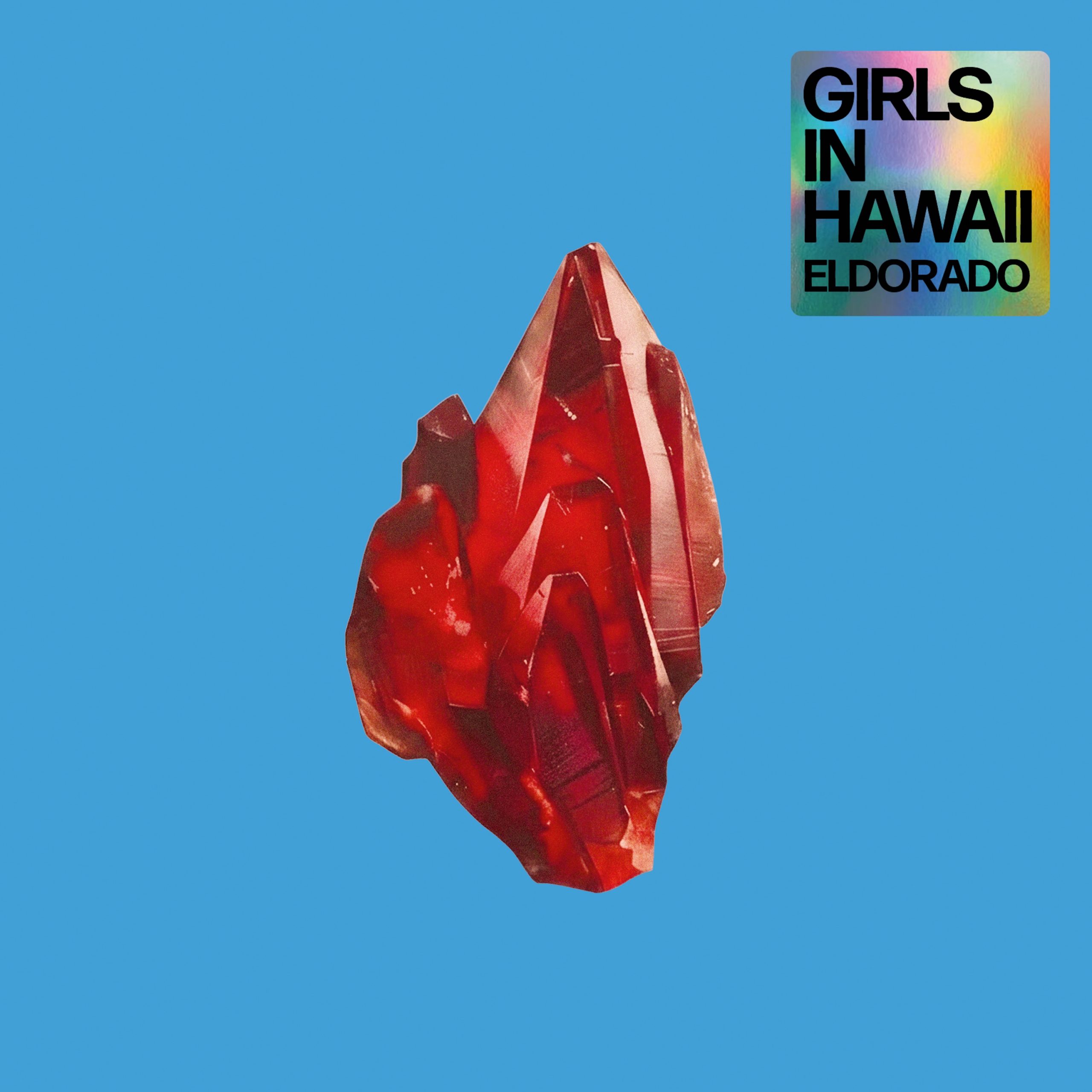
The album artwork features the curves of a bloodstone, also known as heliotrope. According to certain ancient beliefs, this stone symbolizes courage and stability—two qualities that run throughout Eldorado. Because beneath the melodic softness, fragmented imagery, and resurfacing memories, Girls in Hawaii’s new album is also a record about courage: the courage to continue after loss, to rediscover joy without forgetting those who are gone, and to keep believing that a song can still open a path forward.
With Eldorado, Girls in Hawaii are not trying to return exactly to where everything began. They return differently: more aware of time, perhaps freer, and closer to what truly matters. As if, after spending years chasing an imaginary territory, they had discovered that Eldorado was never a destination to reach, but the movement itself: searching together, continuing to write, and standing tall in the fragile light of songs.