
The Lighthouse
—
Release on 23 January 2026
—
Tiny Tiger Records
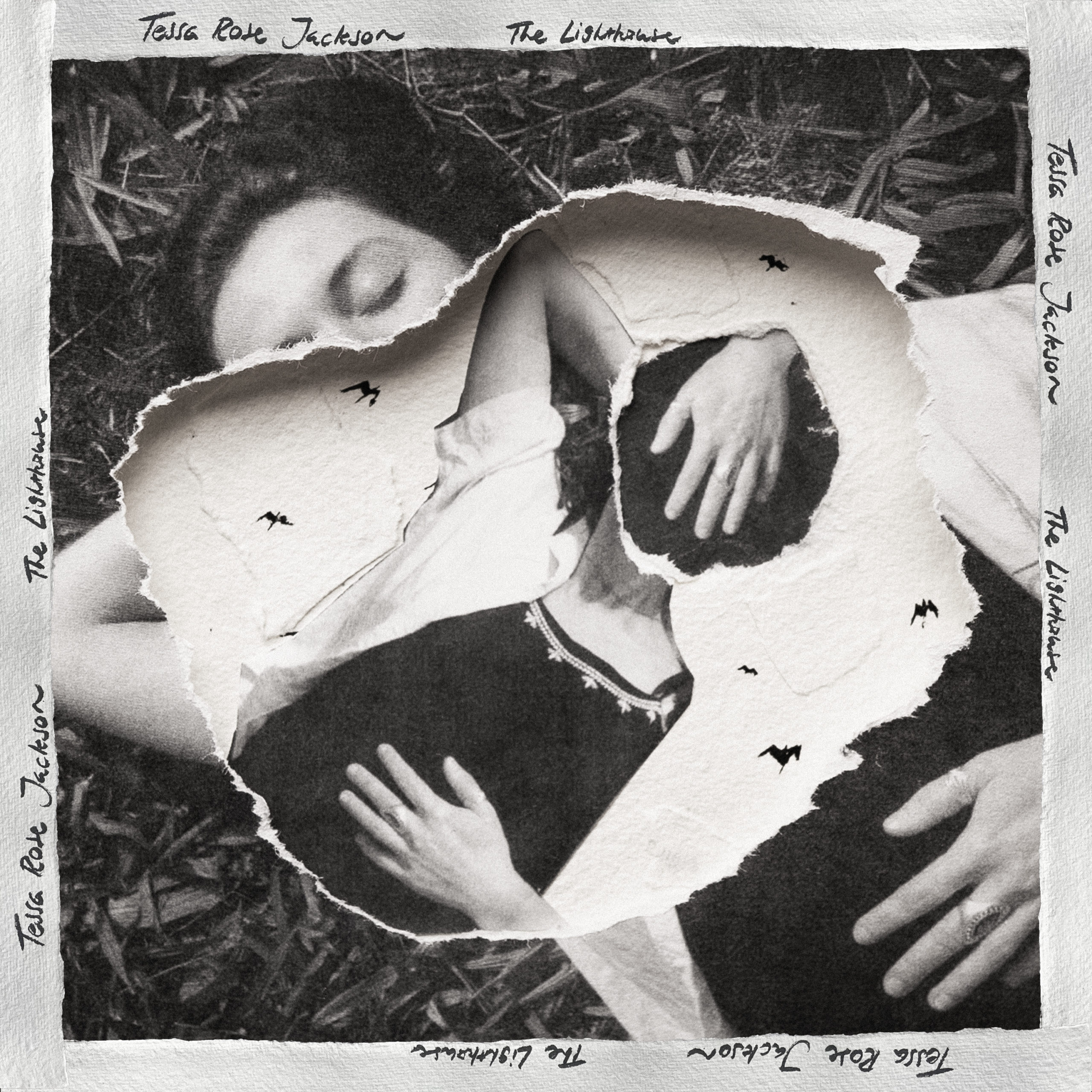
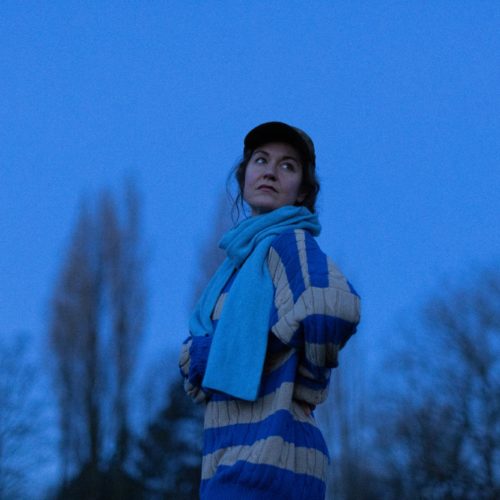
One wintry Amsterdam afternoon in early 2024, a light guided Tessa Rose Jackson home. In the midst of an unproductive few months which this visionary Dutch-British singer, songwriter, artist and composer set aside to write her 5th album, a song struck her from nowhere. “The Lighthouse” was a beacon illuminating her way towards a place of intimacy, exposure and reassurance; of embracing her fears, her identity and her deepest, most morbid fascinations.
“I could see the album before it was made,” she says of the record she’d also name The Lighthouse. “I knew the world I wanted it to live in, a slightly more out of time world, a little bit of ghostly folklore. Talking about mortality means talking about life and how we live it, and how we use it and appreciate it.”
For the 32-year-old Jackson, it’s been a colourful, if turbulent, journey to The Lighthouse. Raised in Amsterdam to two lesbian mothers, she sadly lost one of her parents at a young age. “I learned to think about death and loss as something inescapable and vast very early on,” she says. “I always used to say: if you’re not a little bit scared of dying… do you really appreciate what it means to be alive?”
She found a release in music, struck by the certainty, at her first singing lesson aged 13, that she needed to perform forever. Via the Conservatorium van Amsterdam and the BRIT school in London – where a passion for production took hold – Jackson found herself modelled as a young pop star in Holland. Her 2013 album (Songs From) The Sandbox was a success for her at the age of 19, but also an instant albatross. “It took me on a rollercoaster,” she says. “I realised very quickly that I wanted to go much deeper into music, into much more interesting waters. I felt pushed into an image that wasn’t me.” Rejecting performative pop, for the next decade she retreated behind a kind of anti-pseudonym, recording simply as Someone, “a project about the creative side of everything and not image”.
From 2017, Someone indulged influences from Air to Charlotte Gainsbourg, Carole King, Feist and Tame Impala to make immersive, beautiful dream pop music: electronic yet artful, sci-fi yet human, pop yet poised, synthetic yet full of heart. Art and innovation was at Someone’s core. The cosmic cones and cuboids on the artwork of 2019’s Orbit EP, when viewed through an augmented reality app, would spin, slide and lift right off the sleeve. Live, Someone would often play with a VJ projecting such mind-bending visuals onto a transparent screen stretched across the front of the stage. “Sometimes I’d be standing next to a big block of marble while I’m playing and it would be spinning,” Jackson recalls. “I love abstract art and I love triggering other people’s imagination.”
In the wake of 2020’s EP compilation Orbit II, however, the pandemic sent Jackson on a more inner-space journey. 2021’s Shapeshifter album was a more intimate, cinematic and velvet-lined affair, akin to a modern Joni Mitchell; a therapeutic record about shedding baggage, defying demons and “being able to deal with the stuff the world throws at you”. Back in the world, a Lynchian road trip from New Orleans to Nashville inspired 2023’s Owls, a concept album about “love and loss, intimacy and secrets and the shadowland between dreams and reality”. The vinyl record came with 11 phenakistoscopes, animation discs that came to life when spun on a turntable, illuminated by Jackson’s stroboscope app.
Ultimately, Someone dissolved into the ether. “It did its work,” Jackson says. “It allowed me to develop in my own artistry, and allowing that to shape without too much outside pressure. I feel like it did its job now, and I can go back to my own name.” And revealed as Tessa Rose Jackson again, she began peeling back the layers even further.
Following a stripped-down UK tour, Jackson set aside two months in early 2024 to compose her next album in a house in France, beside a graveyard. “I set myself a challenge,” she says. “I wanted to write without reaching for the songwriting safety-nets I’d started to recognise in my songs. My intention was to create something freeform and flowing. Not reliant on pop song structure, not decidedly ‘hooky’. To spin stories, and let them spin out whichever direction they wanted to go.” The Amsterdam days were dreary, though, and inspiration scant. Until. Inspired by Beck’s Sea Change album, “The Lighthouse” shone through the murk.
“The lyrics are just what I’d gone through,” she says. “The idea of a sailor out at sea and everything is misty, and everything is just veiled and unclear. And then suddenly there’s this lighthouse in the distance. ‘The Lighthouse’ felt like that – ‘okay, I have something, I can go there’.”
In thrall to Tim Burton and Hadestown, Jackson originally intended the song to be the start of a concept album following a sailor as he discovers the Land of the Dead. “All the ghosts of the island tell him about life, he visits them all, and then at the end they find a way to send him back to the land of the living with this idea of like ‘we will see you, one day you’ll be back here, but not now, so on your way’.” The songs that followed – set aside to mature for several months then recorded at Shorebreaker Studios in France, with film-maker Bibian Bingen recording the process for an accompanying documentary – took on a looser theme, however; death, and the life it illuminates.
“I love talking about death, and people find this disconcerting sometimes,” she admits. “I use the idea of death in an almost motivational way with myself now. Sometimes when I’m like, ‘will I do this, yes or no?’, I go ‘let’s just do it, because I’m gonna die one day.’ As a theme, it felt very refreshing and liberating.”
Take “The Man Who Wasn’t There”, a dark folk piece in the vein of Sharon Van Etten, pastoral but unearthly, built from ghost dimension strings and amorphous elegance. Its title speaks of a spectral figure – the ghost of the possible lives we could have lived. “It’s like there’s an imprint of you on a hypothetical world that didn’t happen,” Jackson says. “This idea of trying to constantly superimpose a hypothetical version of yourself that took a different route on life. It’s me saying ‘stop doing that’.” Its sister-piece is “Grace Notes”, a muted piano and acoustic lament in which Jackson confronts the life paths she hasn’t yet taken: “I’m not the woman I thought I’d have to be by now,” she sings, considering aimlessness, fleeting youth and the pressures of potential motherhood. “The rest of the album is very visual and multi-interpretable,” she says. “And then ‘Grace Notes’ is just like, ‘bam, these are my thoughts’.”
The Lighthouse is a generation spanning affair. “The Bricks That Make the Building”, with its brushes of harp, pastoral vocal melody and ghostlike backing vocals, looks back to our shared ancestry; the story of a spirit returning to their home on a hill and finding peace that a new family live there now, considering their own heritage and meaning. “It’s also from the perspective of the child in the house thinking about the bricks that make the building,” she explains. “What’s the blood that runs in my veins? It’s not only mine. It’s a lot of people that have come before me that have done things and shaped things for me. It’s a musing on that, and also a sense of gratitude towards the lives that that allowed me my life.”
And “Dawn” – where an infectious Mellotron flute melody weaves around intricate, groovy folk guitar – was written as a song of support for Jackson’s niece, herself coming to an age of teenage struggle and beginning to open up. “It almost feels like a little door in time, where you can go, ‘I wish someone had said this to me’.” Recording the vocal, Jackson herself broke down, relating more to the song’s troubled childhood “trooper” rather than the comforting aunt kissing the bruise. “The vocal that’s on the album is the take just after I had cried my eyes out,” she says, “when I was like, ‘I can do it. Let’s do it. Put it on record’.”
Several songs speak directly to Tessa’s lost mother. The stately, Gallic-flecked “Wild Geese” is a poignant tribute; Jackson often thinks of her mother as part of a flock of geese flying over Lake Superior in her home state of Minnesota, “she always used to talk about it with so much love”. And the misty, confiding “Gently Now” tackles the issue of growing older and more comfortable with your grief. “Grief is that you loved someone,” Tessa concludes. “That, in a sense, can only be beautiful.”
Others defiantly square up to the reaper. With its Fiona Apple junk beats and Sufjan Stevens climax, “When Your Time Comes” is Jackson’s “Tim Burton song”, turning the lens on the listener to consider their interpretation of their final moments. “I can imagine the village square, one person on a milk crate asking people ‘do you ever get in that weird spiral? How do you feel about it?’” And “Fear Bangs the Drum” celebrates our deepest fears to the sound of spectral atmospherics and a playful brass hook. “It’s a reminder to myself to try and let it be, it’s okay to feel fear, just allow it to go.”
A bright beam of reassurance from the darkness, The Lighthouse is both timely and timeless, intimate and universal, sumptuous and spare. A thing of stature and beauty gleaming in the pitch. “It’s an album that’s about death, but not in that very dark sense,” Tessa says. “For me, it’s also very much about life – the celebration of life and allowing yourself to think about these things.” And on the cliff face of modern alt-folk, it stands tall.